Very few schools possess the rich foundation of original intellectual inquiry enjoyed by
The Roeper School. George and Annemarie Roeper aspired to change the traditional premises of education into a more humanistic, ethical, joyful, and self-directed “philosophy for life.” They wrote prodigiously, and their ideas inspired others to explore the implications of their ideas and innovations. Here is an annotated source list of published material — books, articles, an academic journal, and a documentary film – by and about the Roepers, their school, and the schools of Annemarie’s parents, Max and Gertrud Bondy.
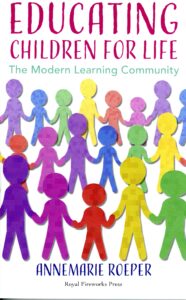
Educating Children for Life: The Modern Learning Community
Annemarie Roeper
The Roeper School is best known as a school for the gifted, but George and Annemarie always thought their educational philosophy was right for all children. This book, first published in 1990, is a how-to manual for an educational model that respects each child’s unique emotional, intellectual and physical journey, nurturing that growth in a community of safety, discovery, and joy. It includes a detailed description of the evolution of The Roeper School.
Available from Royal Fireworks Press, $15.00 online here.
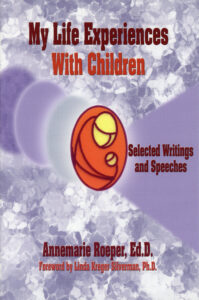 My Life Experiences with Children: Selected Writings and Speeches
Annemarie Roeper
This collection of 22 articles and speeches spanning Annemarie’s long career focuses on giftedness in children and adults. Known for her insight into the emotional lives of the gifted, Annemarie covers topics such as self-image, stress, cognitive processes, gender, the lives of gifted adults, and the heightened commitment to ethics and social justice.
This book is out of print, but The Roeper School has a limited number for sale for $20, including shipping and tax. Use the Contact form for more information.

The “I” of the Beholder: A Guided Journey to the Essence of a Child
Annemarie Roeper and Ann Higgins.
This lyrical book is Annemarie’s distillation of a lifetime’s thought about who we are, how we become our most true and honest selves, and the kind of settings that nurture that process.
Gifted Unlimited, $18.95 here.
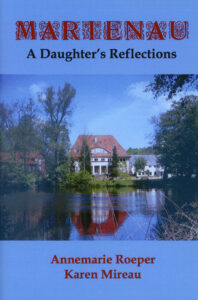
Marienau: A Daughter’s Reflections
Annemarie Roeper & Karen Mireau
Shortly before she passed away, Annemarie completed this sweet memoir that vividly captures her remarkable childhood spent between the wars in Germany. The daughter of two brilliant, idealistic educators, Annemarie grew up in a world of art, music, freedom, love, and challenge. The rise of the Nazi Party destroyed that world, forcing her Jewish family to flee, ultimately to America, where they continued to work in the field of education the rest of their lives.
Lulu.com, $17.95 here.

Beyond Old Age: Essays on Living and Dying
Annemarie Roeper
After a lifetime of thinking about children and their development, Annemarie turned her thoughts to the developmental changes that come to the old. In essays she wrote between the ages of 87 and 92, she explores her emotional response to aging, trying to see and understand its place in the lifelong process of growth, and trying to absorb and share the hard lessons of aging.
Lulu.com, $19.95 paper here.

The Roeper School: A Model for Holistic Development of High Ability
Don Ambrose, Bharath Sriraman and Tracy L. Cross (Eds).
In this authoritative collection, top scholars in the field of gifted education and teachers, students, and alumni of The Roeper School examine the premises and outcomes of the Roeper model. They conclude that it offers an education that is particularly well-suited for the opportunities and challenges of a diverse and rapidly changing world.
Brill Publishers, $54.00 here or through online retailers.
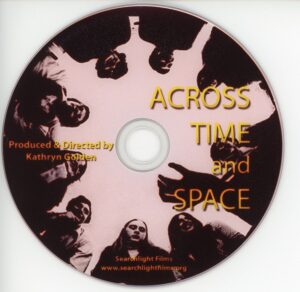
Across Time and Space
Kathryn Golden and Ashley James
This 60-minute film examines the educational philosophy of Annemarie’s parents, Max and Gertrud Bondy. The Bondys were part of the German progressive education movement that emerged after WWI in hopes that children raised to be tolerant, thoughtful, creative people could shift the world to a more inclusive and peaceful place. It includes footage from the Bondys’ school in Germany, Marienau; their now-closed school in the U.S., Windsor Mountain School; and The Roeper School, founded by their daughter Annemarie and her husband and their former student, George Roeper.
To purchase a copy, e-mail Searchlight Films.
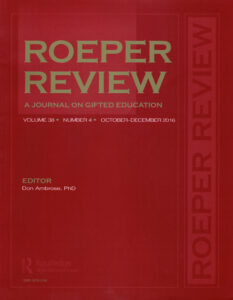
Roeper Review: A Journal on Gifted Education
Don Ambrose, PhD (Ed)
The Roeper Review, a peer-reviewed journal of gifted education, was launched in 1978 by George and Annemarie. At the time, there was very little information available about gifted children. Teachers and administrators across the country, desperate for guidance, began subscribing to Roeper’s school newsletter, which included articles about giftedness amidst the classroom news and student poetry. In 1976, Roeper added a Professional Section to the newsletter, and in 1978 spun that off into a full-fledged professional journal. Still published by The Roeper School — a remarkable thing for an elementary/secondary school — it is currently edited by Don Ambrose, Professor of Graduate Education at Rider University in Lawrenceville, N.J., and offers current academic research from around the globe. Distributed by Taylor & Francis.
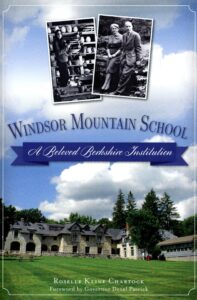
Windsor Mountain School: A Beloved Berkshire Institution
Roselle Kline Chartock, with a forward by Governor Deval Patrick.
Chartock, a scholar of education, the Holocaust, and the Berkshire region of Massachusetts, brings her deep background to a subject that combines them all – Windsor Mountain School, which was founded by educational innovators who fled the Holocaust and settled in a private-school-rich region of New England. Windsor Mountain, perhaps the most radical of the schools, had an openness to diversity, experimentation, and globalism that attracted parents as diverse as singer and activist Harry Belafonte, jazz composer Thelonious Monk, and former Secretary of State George Schultz. Chartock researched the Bondys’ background and interviewed former teachers and alumni, concluding that this long-closed school is still relevant for the model it provides of education that nurtures independent thinking, compassion and creativity.
Available from online retailers.

People of Windsor Mountain
Rick Goeld
Goeld was a student at Windsor Mountain School from 1961-63, and he interviewed other former students and teachers to provide an oral history of this remarkable school. Through extensive statements from people who were at Windsor Mountain over the years, he demonstrates an arc that paralleled the larger social changes from the 1940s to the 1970s. No matter what the era, though, students reported the profound impact it had on their lives to spend even a small portion of time at a school that respected their humanity and their right to shape their own destiny.
Available from online retailers.

 [DISPLAY_ULTIMATE_SOCIAL_ICONS]